The Garden Label Is Not the Whole Story
A garden label identifies a plant, but observing its habit, setting and season helps you choose a better place and understand how it will change.
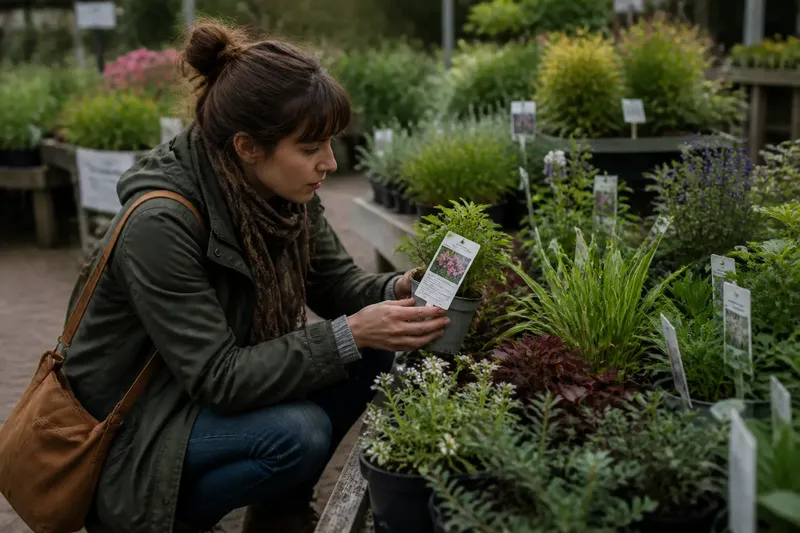
The common mistake with a garden label is treating it as a complete planting plan. A name and a few care notes can help you identify a plant, but relying on them alone can leave you with a specimen that outgrows its place, clashes with its surroundings or looks very different from the picture for much of the year. To read a garden label well, start with its useful facts, then look at the plant’s habit, setting and seasonal changes.
Start with the facts the label can provide
Check the label before you buy, but separate identification from prediction. The plant’s common name may vary between shops or regions; its botanical name is usually more precise. If a label gives both, note them together. That makes it easier to check which plant you are considering if you later consult a catalogue or ask a knowledgeable gardener.
Look for information about the plant’s mature form, preferred light and soil, flowering season and hardiness. These details are useful starting points, not a promise that a plant will behave identically in every garden. A label may describe general needs without accounting for the sheltered corner, exposed terrace or heavy soil where you plan to grow it.
Before deciding, ask yourself what you need the plant to do. Are you filling a border, covering soil, adding flowers for a particular season, or growing something in a pot? A label that highlights a long flowering period may matter in one position and be beside the point in another. Your intended use gives the printed facts a purpose.
Look at the whole plant, not just the flower
Labels tend to emphasise a striking bloom or distinctive foliage. At the nursery, step back and inspect the plant’s outline. Notice whether it is upright, rounded, spreading, arching or loose. Look at where the leaves begin, how the stems branch and whether the plant already leans towards available light.
These clues help you picture the plant as a neighbour. A narrow upright form can leave room beside a path; a spreading one may spill over its edge. A plant with a loose shape may suit a naturalistic border but look untidy against a clipped hedge. Consider the plant’s structure even when it is not flowering, because that is often what you will see for most of its time in the garden.
Inspect the foliage for texture, colour and arrangement. Fine leaves can soften the edge of a border, while large leaves create a more emphatic block. Notice whether the leaves sit close to the ground or rise on long stems. These observations are more dependable than judging a plant by a single flower photograph, which cannot show how its leaves fill space or how its shape reads from a distance.
Ask whether the plant is being sold in a form that reflects its natural habit. A young plant may look compact simply because it has not yet filled out. A specimen in a small pot can also conceal how broadly its growth will spread. The label’s mature dimensions, if provided, can help, but compare them with the plant’s visible structure rather than treating them as a precise forecast.
Read the setting where you intend to plant
Next, match the plant to the conditions at its intended spot. Think about how long direct sun reaches the area, whether nearby walls or trees create shade, and whether wind dries it out. A label’s sun category is a broad guide; the pattern of light in your garden is more specific. If you are unsure, observe the space over ordinary days before choosing.
Check the soil as well. Is it heavy and slow to drain, light and quick to dry, or somewhere between? Does the bed stay damp after rain, or do nearby roots compete for moisture? A plant that prefers free-draining soil may struggle in a persistently wet hollow, while one that appreciates moisture may need attention in a dry border. The label points to a preference; your site determines whether that preference is plausible.
Think beyond the planting hole. A plant beside a path can brush passers-by, and one near a window may block a view as it grows. Consider how it will meet existing plants, paving, steps and garden furniture. Leave the space its mature habit is likely to need, rather than squeezing it into a gap that only fits the nursery pot.
Say you are choosing a low flowering plant for a sunny strip beside a gravel path. The label says it prefers sun and well-drained soil, but the strip is shaded by a fence in the afternoon and receives runoff from a downpipe. You could look for a plant whose observed habit stays clear of the path, then check whether the soil at that spot dries between rains. If the site remains wet, the expected result of choosing a better-matched plant is growth that fits the strip more comfortably, rather than persistent stress or crowding.
Use the season to complete the picture
A label often presents a plant at its most decorative moment. Ask what it looks like before flowering, after the flowers fade and during the quieter part of the year. Foliage may emerge early, disappear after flowering or remain as a useful shape. Seed heads may add texture, while spent stems may need cutting back. These changes affect how the plant works in a border over time.
Use the stated flowering season as an estimate, then compare it with the rest of your garden. If several plants in one bed flower at once and leave a gap afterwards, think about what will take over visually when their display ends. A plant with modest flowers but persistent foliage may contribute more to the overall composition than a briefly spectacular specimen.
Season also affects where a plant will be noticed. Spring growth beside a doorway may be easy to enjoy; summer flowers at the back of a deep border may be partially hidden. Consider the view from the path, a window or a favourite seat, and how that view changes as nearby plants grow. The label cannot tell you whether the plant will be visible from the places where you spend time.
At a garden centre, look for plants at different stages if the same variety is displayed in more than one condition. A flowering specimen reveals its colour and flower shape; a non-flowering one may show the underlying foliage and structure more clearly. If only one stage is available, use the label for identification and treat the photograph as a glimpse, not a year-round portrait.
Check what the label leaves unclear
Some details deserve a second look before you commit. Labels vary in how much space they have, so an omitted fact is not necessarily evidence that it does not matter. Check the plant’s name against the nursery’s fuller description or ask staff when you need clarification. Follow the product label, supplier’s instructions and local rules where they apply.
- Final shape: If mature size is missing, ask how the plant typically spreads and whether it needs room at the edges.
- Winter behaviour: Find out whether the top growth dies back, stays evergreen or changes noticeably in cold weather.
- Soil preference: Clarify whether the plant needs sharp drainage, moisture-retentive soil or a particular soil condition.
- Pruning needs: Ask when it is normally cut back and whether cutting affects its next display.
- Potential spread: Check whether it tends to seed freely, spread by runners or remain in a compact clump.
- Growing conditions in a pot: If you plan to use a container, ask whether the plant suits that setting and what ongoing care it needs.
Not every plant needs a dossier. It is not worth spending time chasing an exact flowering date or a perfect measurement when your decision is simply whether a small, forgiving plant might suit a spare corner. Put your effort into the details that could change the choice: space, drainage, shade, spread and the role the plant needs to play.
How should you interpret common label terms?
Does “full sun” mean sun all day?
Not necessarily. It is a general description of a light preference, and the label may not explain how strong or prolonged the light must be. Compare it with the actual conditions at your planting spot, including shade from fences, trees and buildings.
What does “compact” tell you about a plant?
It suggests a relatively restrained form, but it does not show exactly how the plant will spread in your soil or climate. Look at its branching and foliage, and ask whether it stays in a clump or extends beyond its base.
Can the label tell me when a plant will flower?
It can suggest a usual season, not the exact timing in your garden. Local weather, light and the plant’s condition can shift the display, so use the season as a guide when planning combinations rather than a fixed appointment.
Should I trust the photograph on the label?
Use it to recognise the flower or foliage, but remember that it isolates the plant from the setting around it. Check the living specimen’s shape and leaves as well, then imagine how the plant will sit among your own paths, borders and other plants.
Make the choice by combining label and observation
Before buying, bring the pieces together. Confirm the plant’s identity, identify the job you want it to do, and compare its visible habit with the space available. Then check the conditions it prefers against the light and soil you have. Finally, consider what it offers after its peak display has passed.
If one important detail remains unclear, pause and ask rather than assuming. A short conversation or a fuller plant description can settle whether the plant spreads, needs regular pruning or suits a container. If the answer is uncertain, another plant with a clearer fit may be the simpler choice.
The garden label is most useful as a starting point, not a verdict. Read it for the name and broad requirements, then let the plant’s shape, your site and the changing seasons fill in what the small printed card cannot show. That habit makes a garden-label choice more considered and helps each plant earn its place throughout the year.